
For a design led business, your website needs to do two things well: communicate the value of your brand and make it easy for customers to buy.
The balance between those priorities is what makes choosing between Squarespace and Shopify worth considering carefully.
Both platforms allow you to create a branded website and sell products online. The difference is in their strengths. Squarespace combines visual presentation, editorial content and commerce within one website building environment. Shopify is built around selling, with more extensive tools for inventory, order management, integrations and multiple sales channels.
For independent furniture brands, homeware businesses, jewellery designers and creative founders, the right choice depends on how the business operates, not simply which platform looks better.
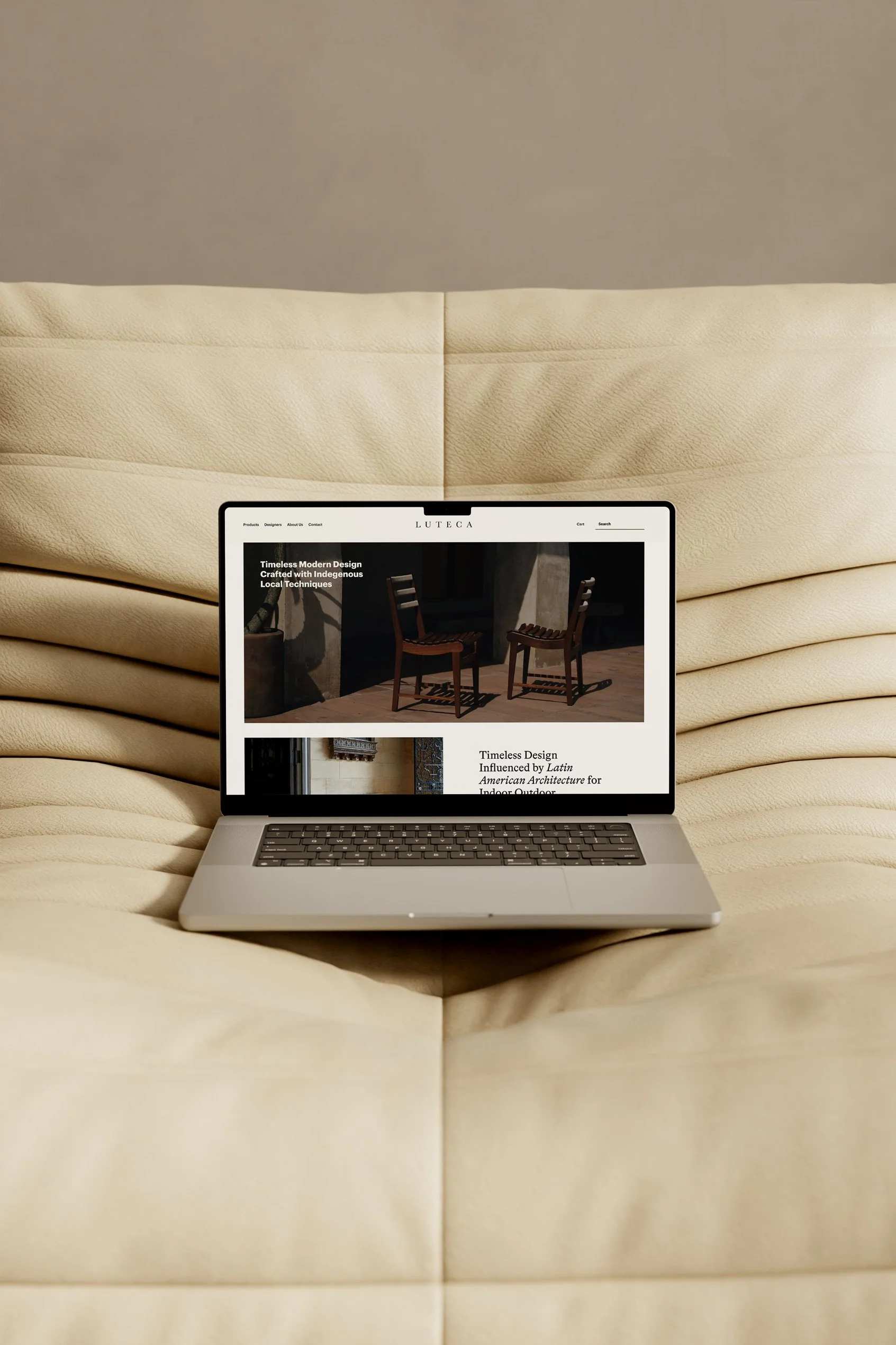
Luteca is a distinguished furniture brand and online store that brings together an exquisite selection of contemporary and mid-century modern pieces from some of the world’s most respected designers.
Squarespace vs Shopify: the main difference
Squarespace is particularly well suited to businesses where the website needs to introduce the brand, communicate its point of view and support a focused product or service offering.
Shopify is particularly suited to businesses where e commerce is central to the operation, especially when product management, fulfilment, multiple sales channels or a more extensive catalogue are important.
Neither platform limits you to a particular aesthetic. Both can support considered, distinctive website design.
The more useful question is which platform provides the right foundation for your business.
When Squarespace is the better choice
Squarespace is a strong option for businesses that want brand presentation and commerce to work together without managing a complex retail operation.
It can suit a furniture studio with a curated collection, a jewellery designer with a focused product range or a homeware brand that combines online sales with editorial storytelling.
Its integrated website tools make it possible to bring together product pages, brand information, a journal, project imagery and other content within one environment.
Squarespace is worth considering if:
Your product range is relatively focused.
Brand storytelling and visual presentation are central to the website.
You want your journal, portfolio and store to feel connected.
You sell products alongside services or other content.
Your inventory and fulfilment requirements are straightforward.
The advantage is not that Squarespace is inherently more attractive. It is that its website and content capabilities can make sense for a business where selling is one part of a broader brand experience.
When Shopify is the better choice
Shopify is often the stronger option when product sales drive the business and the website needs to support increasingly complex operations.
A growing homeware brand may need to manage many products, variants, stock levels, promotions, shipping rules and orders. A jewellery business might sell internationally, work with retail partners and use several channels to reach customers.
Shopify provides a dedicated commerce environment with inventory management, order processing, integrations and tools for selling across online and physical channels. Its wider app ecosystem also allows businesses to add functionality as their requirements develop.
Shopify is worth considering if:
E commerce is your primary business model.
You manage a substantial or expanding product catalogue.
Inventory and fulfilment require more advanced workflows.
You sell through several channels or physical locations.
You need specialised integrations or more extensive commerce functionality.
Choosing Shopify does not mean compromising on art direction. The platform can support highly considered websites, but achieving the right visual result still depends on the theme, design decisions and quality of the implementation.

De La Region is a curated home decor brand celebrating the beauty of cultural heritage through everyday objects.
Which platform offers better design flexibility?
For design led brands, this question often receives too much attention in isolation.
Squarespace provides a strong starting point for combining pages, imagery, typography and editorial content. Shopify offers customisable themes and a range of ways to adapt storefronts, product pages and checkout experiences.
Both can support a distinctive visual identity, particularly when the website is designed around the brand rather than assembled from default settings.
The more important distinction is how the design needs to work.
A furniture brand may need large editorial images, detailed product stories and a carefully curated collection. Another business may need advanced product filtering, complex variants and a streamlined route from category page to checkout.
The first may find Squarespace a natural fit. The second may benefit from Shopify's commerce focused structure.
What about SEO?
Neither platform automatically guarantees better search rankings.
Both support essential SEO practices, including page titles, descriptions, structured website navigation and tools for presenting content to search engines. Results depend on the quality of the website, its content, technical implementation and relevance to what people are searching for.
For a design led brand, SEO should be considered from the beginning.
Product pages need descriptive names and useful copy. Images should have appropriate alt text. Collection pages should help customers understand what is available. Editorial content should answer relevant questions rather than exist simply to fill a journal.
If you move from one platform to another, plan the migration carefully. Important URLs, product information and established search visibility should be considered before the new website launches.
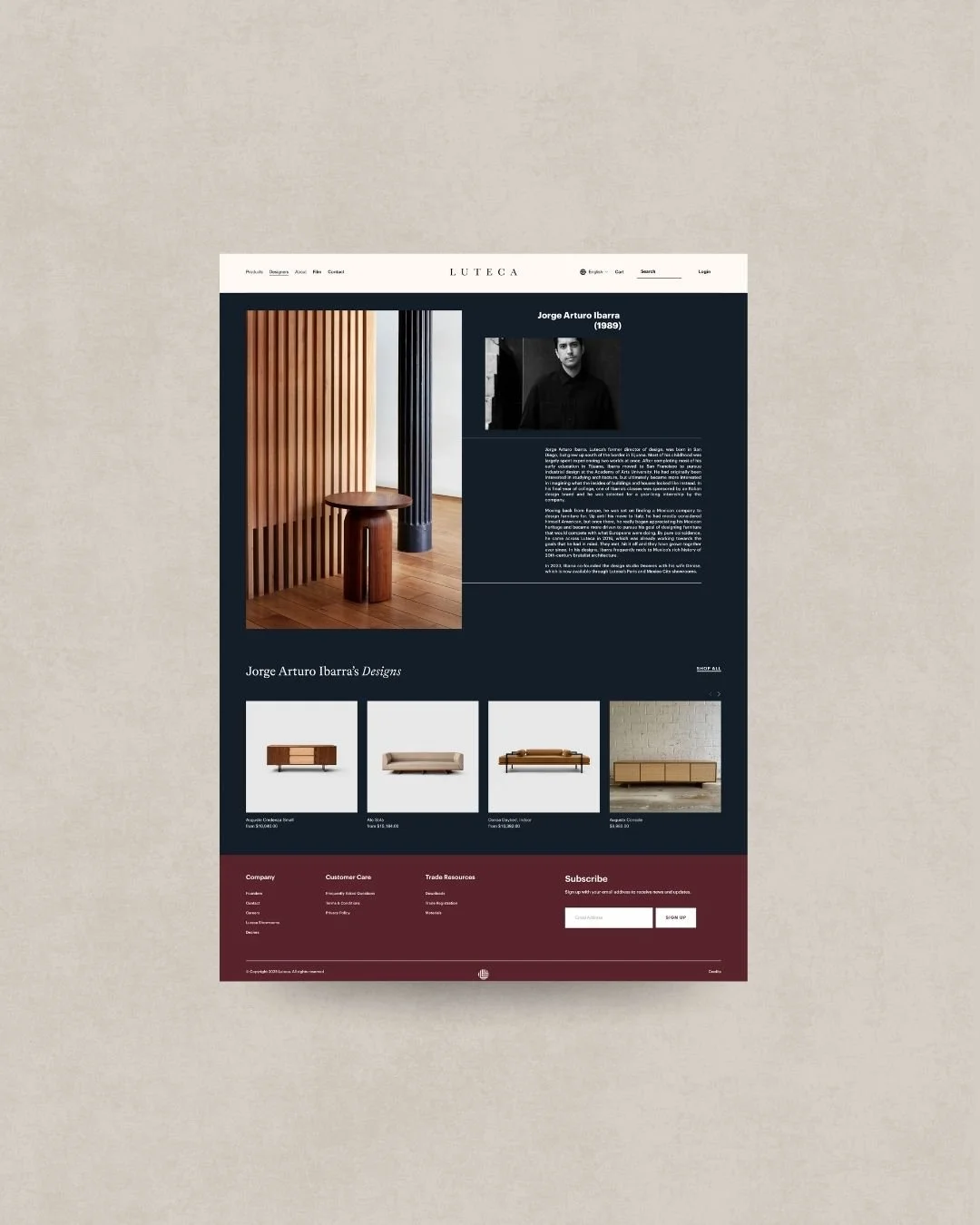
Luteca is a distinguished furniture brand and online store that brings together an exquisite selection of contemporary and mid-century modern pieces from some of the world’s most respected designers.
Which platform is easier to manage?
The answer depends on what you need to manage.
Squarespace can feel more straightforward when the website combines a modest store with services, portfolio content and editorial pages.
Shopify can provide a more suitable working environment when the day to day business involves managing products, stock, orders, promotions and fulfilment.
Think beyond the initial launch. Consider how often you will add products, update collections, publish content, process orders and manage customer enquiries.
The best platform is the one that supports these activities without creating unnecessary work.
Can a design led brand look premium on Shopify?
Absolutely. Shopify does not dictate a generic e commerce aesthetic.
The visual result depends on the design system, typography, photography, layout, product presentation and the way the brand story is communicated.
The same is true of Squarespace. A well designed platform cannot compensate for inconsistent imagery, unclear copy or a poorly considered customer journey.
Your brand identity should guide the website design, while the platform provides the structure and functionality required to deliver it.
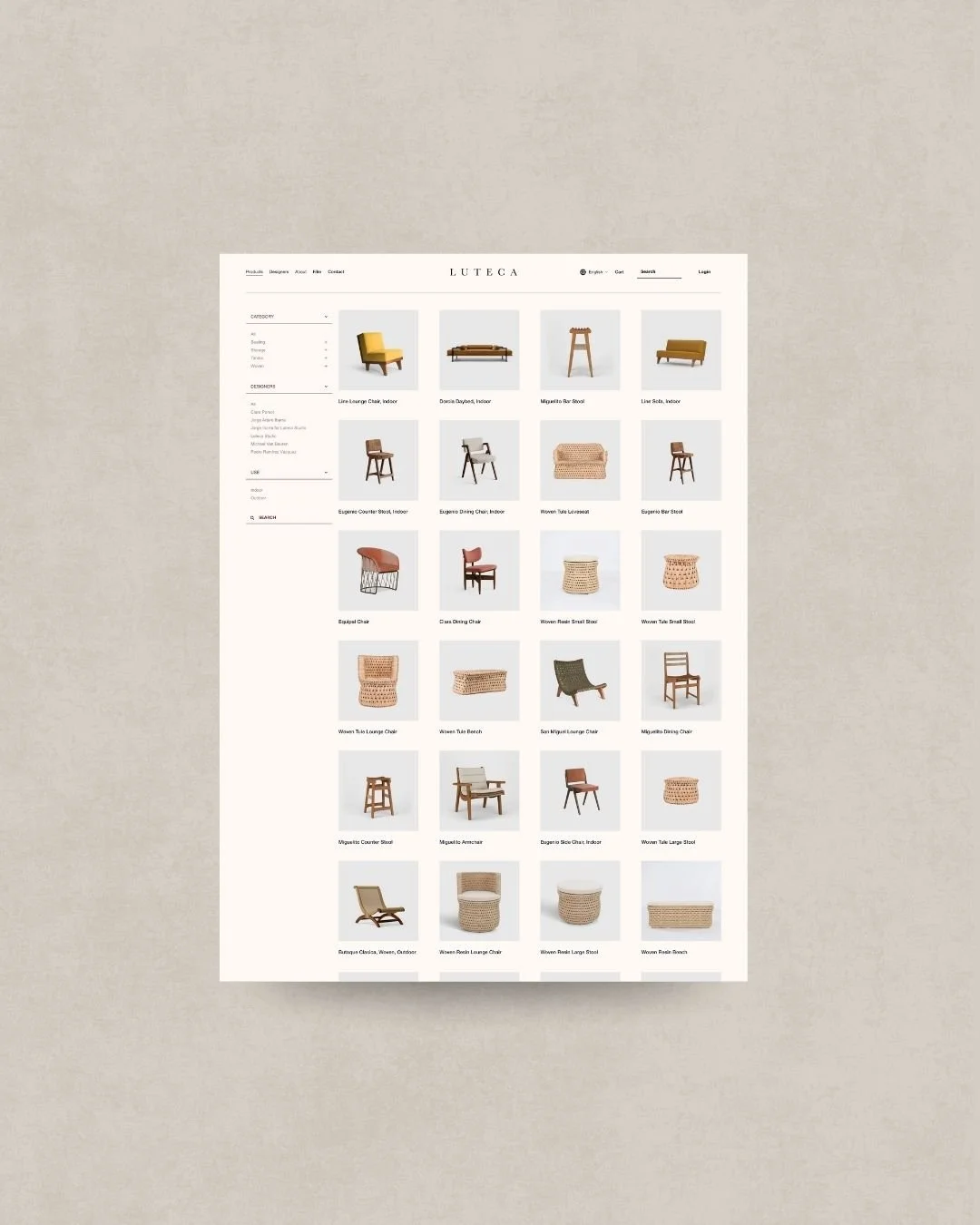
Luteca is a distinguished furniture brand and online store that brings together an exquisite selection of contemporary and mid-century modern pieces from some of the world’s most respected designers.
Frequently asked questions
Is Squarespace or Shopify better for a small product brand?
Squarespace can be a good fit for a focused collection with strong editorial needs. Shopify may be more appropriate if product management, fulfilment and sales channels are already complex or expected to become so.
Can you sell products on Squarespace?
Yes. Squarespace supports online selling, including physical products and other offerings, with features depending on the plan and integrations you use.
Is Shopify better for growing an e commerce business?
Shopify is often a strong choice for businesses that expect to expand their catalogue, sales channels or operational requirements. The appropriate platform still depends on the specific business model.
Can I move from Squarespace to Shopify later?
Yes, but migration requires planning. Product data, content, URLs, redirects and integrations should be reviewed to reduce disruption and protect valuable search visibility
Choosing the right foundation for your brand
The decision between Squarespace and Shopify should begin with your business model.
Choose Squarespace when the website needs to bring brand storytelling, content and a focused store together in one coherent experience. Choose Shopify when product sales and the systems behind them require a dedicated commerce platform.
In both cases, the design should make the value of your products easier to recognise and the buying experience easier to navigate.
At Avelã Creative, we design custom Squarespace and Shopify websites for design led businesses, from furniture and homeware brands to creative studios and independent founders. Explore our Website Design service or start a project to discuss the right platform for your business.
Where to Start
Your e commerce platform should support both the way your brand looks and the way your business operates. Explore our Website Design service or start a project to discuss a custom Squarespace or Shopify website built around your products, customers and ambitions.